
"the country"
54000 article(s) found
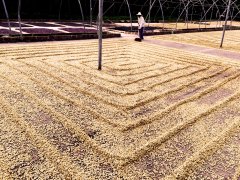
Bourbon characteristics of the History of Coffee cultivation in El Salvador, the birthplace of Pacas Pacamara Coffee beans
Position in the world as a coffee exporter (19gam20): sacks exported annually on the 19th (60kg) (19gam20): about 546000 percentage of the world coffee market: less than 1 per cent of other major agricultural exports: typical varieties of sugar, corn, rice, beans: bourbon, Pacas, Pacamara, Kaddura and Katuai major coffee producing areas

Premium coffee knowledge coffee quality coffee bean grading method
There is no internationally accepted standard for coffee quality grading, and the grading method varies from country to country. Therefore, coffee classification is based on some of the characteristics applicable to each producing country. The sample of coffee beans taken from a bag is judged according to the standards of the producing country, the samples are rated, and most of the coffee is good or bad according to the evaluation.

Coffee common sense the way people in various countries drink coffee
People all over the world drink coffee in different ways, but if you ask how many ways to drink coffee, I'm afraid no one can tell. It can be said that there are many ways to drink coffee in as many countries as there are in the world. 1/3 people in the world drink coffee, but it seems that no two countries drink coffee in the same way. People in Arab countries

The Origin and Development of Fine Coffee beans in Linna Manor, Nicaragua, one of the poorest countries in Central America
Nicaragua is one of the poorest countries in Central America. Due to its poor economic foundation, the coffee industry is still relatively backward, while coffee farmers are in extreme poverty. Fortunately, Nicaraguan coffee has received some foreign aid funds to improve the quality of its coffee. Nicaragua, an economically backward agricultural country, is one of the poorest countries in Central America.

Geographical location of Salvadoran coffee
El Salvador (ElSalvador) is one of the small countries in Central America, where coffee is light, fragrant, pure, slightly sour and characterized by excellent balance of flavor. It is a specialty of Central America. With sour, bitter, sweet and other taste characteristics, the best baking degree is moderate, deep. Salvadoran Coffee-Coffee originated in the early 1990s, guerrilla warfare greatly damaged the country's national economy.
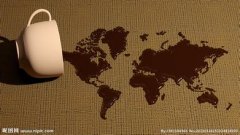
South American producing countries introduced by the world coffee producing countries
Brazil Brazil is the first coffee producer and marketer in the world. The annual output of coffee beans exceeds 30 million bags (60 kilograms each). Coffee experts do not think highly of their beans, saying that they are too monotonous, bitter, sour and fragrant enough, and are not even included in the list of producing areas of fine coffee. Because most of the Brazilian coffee gardens are less than 1200 meters above sea level, there are no big trees to shade, and they are picked.

Summary of coffee bean grade classification in various countries formulation and grade classification of coffee producing countries
In the Qianjie coffee factory, each batch of new beans received, there will be information about these beans, coffee producing country, altitude, manor, treatment, and the grading of coffee to be mentioned today, such as Kenya PB, Yega G1, so what does these grading letters mean? in fact, coffee grading standards vary from country to country and from region to region.

Coffee beans are produced in the world's top ten coffee producing countries
Coffee beans are produced and exported in nearly 70 countries, but the yield and quality vary widely. Brazil, Vietnam, Colombia, Indonesia, Ethiopia, India, Mexico, Guatemala, Honduras and Peru are among the top 10 countries in the ranking of global coffee production published by the International Coffee Organization (ICO) in 2010. Among the ten major producers, except

Coffee quality grading-- coffee bean grading high-grade coffee how to distinguish coffee bean quality
There is no internationally accepted standard for coffee quality grading, and the grading method varies from country to country. Therefore, coffee classification is based on some of the characteristics applicable to each producing country. The sample of coffee beans taken from a bag is judged according to the standards of the producing country, the samples are rated, and most of the coffee is good or bad according to the evaluation.

Suriname, the first country to grow coffee
An important name in the history of coffee. Suriname (Surinam) was the first country in South America to grow coffee, and Norway was once a major importer of coffee products. However, the country's output is very small today, and it is mentioned here only for historical reasons. The Dutch, who settled in Suriname in 1667, introduced coffee trees from Java in the early 18th century. The first coffee trees were made up of

Suriname the first country in South America to grow coffee
An important name in the history of coffee. Suriname (Surinam) was the first country in South America to grow coffee, and Norway was once a major importer of coffee products. However, the country's output is very small today, and it is mentioned here only for historical reasons. The Dutch, who settled in Suriname in 1667, introduced coffee trees from Java in the early 18th century. The first coffee trees were made up of

Types of coffee beans which country produces the most coffee
Countries that produce coffee beans Brazil is the largest exporter of coffee beans in the world, followed by Colombia. These two Central and South American countries account for more than half of the world's coffee production, and the quality is stable. Vietnam has developed rapidly in recent years and has become the second largest coffee exporter in the world. Other countries and producing areas, such as Indonesia, Ethiopia, Guatemala
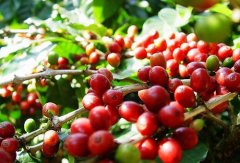
Suriname (Surinam) is the first country in South America to grow coffee
Suriname (Surinam) was the first country in South America to grow coffee, and Norway was once a major importer of coffee products. However, the country's output is very small today, and it is mentioned here only for historical reasons. The Dutch, who settled in Suriname in 1667, introduced coffee trees from Java in the early 18th century. The first batch of coffee trees were given by the mayor of Asmstedan.
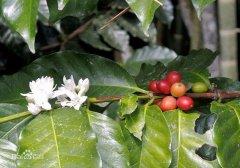
Suriname (Surinam) is the first country in South America to grow coffee.
Suriname (Surinam) was the first country in South America to grow coffee, and Norway was once a major importer of coffee products. However, the country's output is very small today, and it is mentioned here only for historical reasons. The Dutch, who settled in Suriname in 1667, introduced coffee trees from Java in the early 18th century. The first batch of coffee trees were given by the mayor of Asmstedan.

Coffee producer Suriname the first country in South America to grow coffee
Suriname (Surinam) was the first country in South America to grow coffee, and Norway was once a major importer of coffee products. However, the country's output is very small today, and it is mentioned here only for historical reasons. The Dutch, who settled in Suriname in 1667, introduced coffee trees from Java in the early 18th century. The first batch of coffee trees was given by the mayor of Asmstedan.
South African coffee beans with fragrant flavor and low acidity in the country of origin.
It is fragrant with less acidity, reminiscent of coffee beans from Central America. Coffee production in South Africa (South Africa) is mainly in the northeast of the country, from Natal between Transvaal and Mozambique, extending northward to Transvaal, with the southernmost limit of latitude 30 south; further south, coffee cannot be grown due to the harm of early frost.

General knowledge of Coffee introduced by producing countries of International Coffee Organization
International Coffee Organization during the 19th century, coffee became an important international trade because of the large number of demand. It makes most countries earn foreign exchange from coffee export trade as a source of money income for farmers and is an important trade in most countries. Because the split led to changes in prices and product standards, it ended at a conference in New York in 1962.

Beautiful sweetness of El Salvador Himalayan boutique coffee beans cultivation geographical location climate sea
El Salvador's coffee accounts for 40% of the country's exports, and it is usually picked in November, December and the 13th of the following year. The export of raw beans lasts almost all year round. Coffee is produced in seven of the country's 14 provinces, with the largest number in the northwestern provinces of chalatenango and santa ana. The coffee produced in El Salvador is 100% Arabica, of which 68% is

Fragrant El Salvador Mercedes Manor Coffee Variety characteristics of Fine Coffee beans
In January 1932, local elections began, and a large number of Communist Party candidates were elected, but they were not recognized by the government. The Communist Party of El Salvador decided to launch an uprising on the 22nd, but Martinez discovered it. Immediately ordered the arrest of Communist Party leader Farah Bandomatti. The leaderless peasants, armed with machetes, launched a riot as scheduled, but failed under the crackdown by government forces, which immediately retaliated.

Grinding scale of Cuban Crystal Mountain Coffee beans description of the flavor of the manor area
El Salvador (ElSalvador) is one of the small countries in Central America, where coffee is light, fragrant, pure, slightly sour and characterized by excellent balance of flavor. It is a specialty of Central America. With sour, bitter, sweet and other taste characteristics, the best baking degree is moderate, deep. Salvadoran Coffee-Coffee originated in the early 1990s, guerrilla warfare greatly damaged the country's national economy.